
The Story of Colour from Nature
Long before synthetic dyes, colour came from the land. Across cultures and centuries, people drew pigment from roots, leaves, flowers, bark and berries.
Plants such as woad, madder and weld produced the classic trio of blue, red and yellow that once coloured both royal garments and everyday cloth. These were valued for their colour fastness, meaning they held their richness over time. Others, including calendula, hollyhock and elderberry, create more delicate, shifting tones that fade gently with light and age.
Natural dyeing reflects season, soil and timing. No two results are ever identical.
Tradition & Folklore
Many dye plants carry long cultural histories. Woad has associations with warriors and endurance, while madder’s deep red has often symbolised vitality and protection.
In many traditions, the act of dyeing was slow and intentional. Gathering the plant, preparing fibres and tending the dye pot required patience and attention. The process itself was part of the meaning.
Working with Dye Plants Today
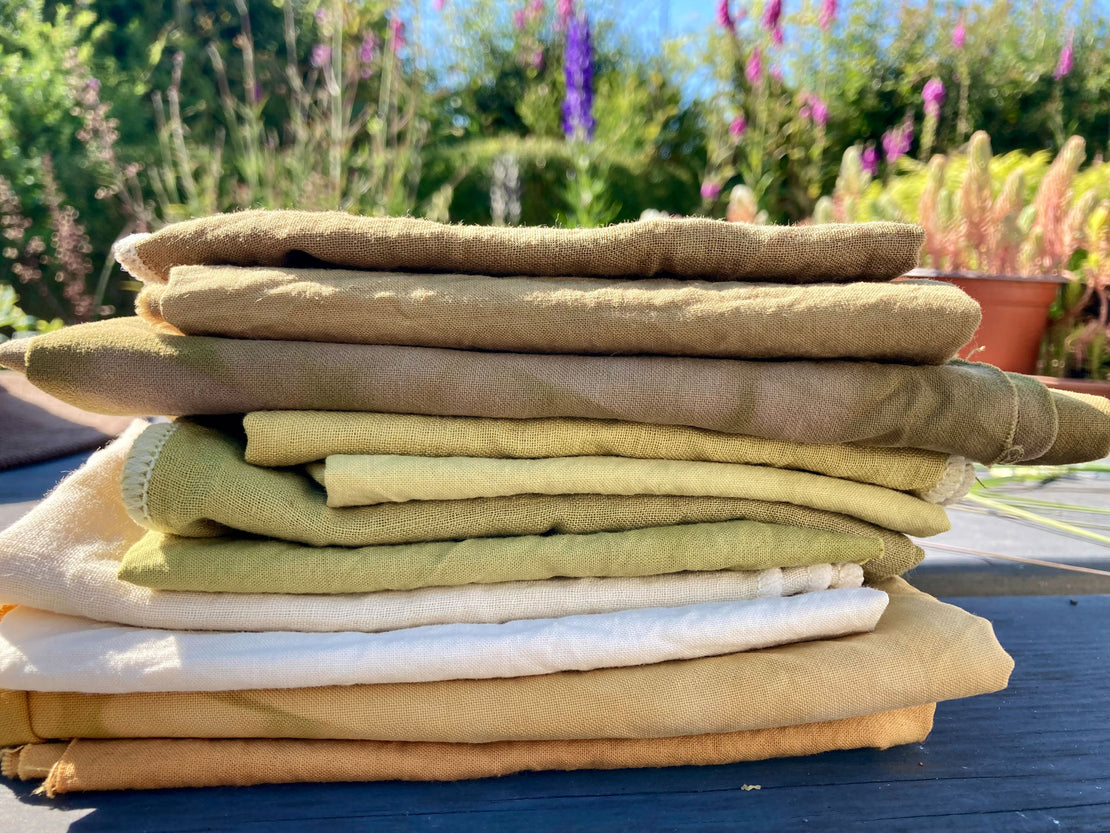
Natural dyes continue to inspire gardeners, artists and makers. They are used not only for cloth, but also in botanical printing, steam bundling, solar dyeing and pigment making for inks and paints.
When working with dye plants, results will vary depending on soil, season, mordants, fibre type and technique. This unpredictability is part of their character.
We recommend researching individual plants and methods before use and experimenting in small batches while learning.